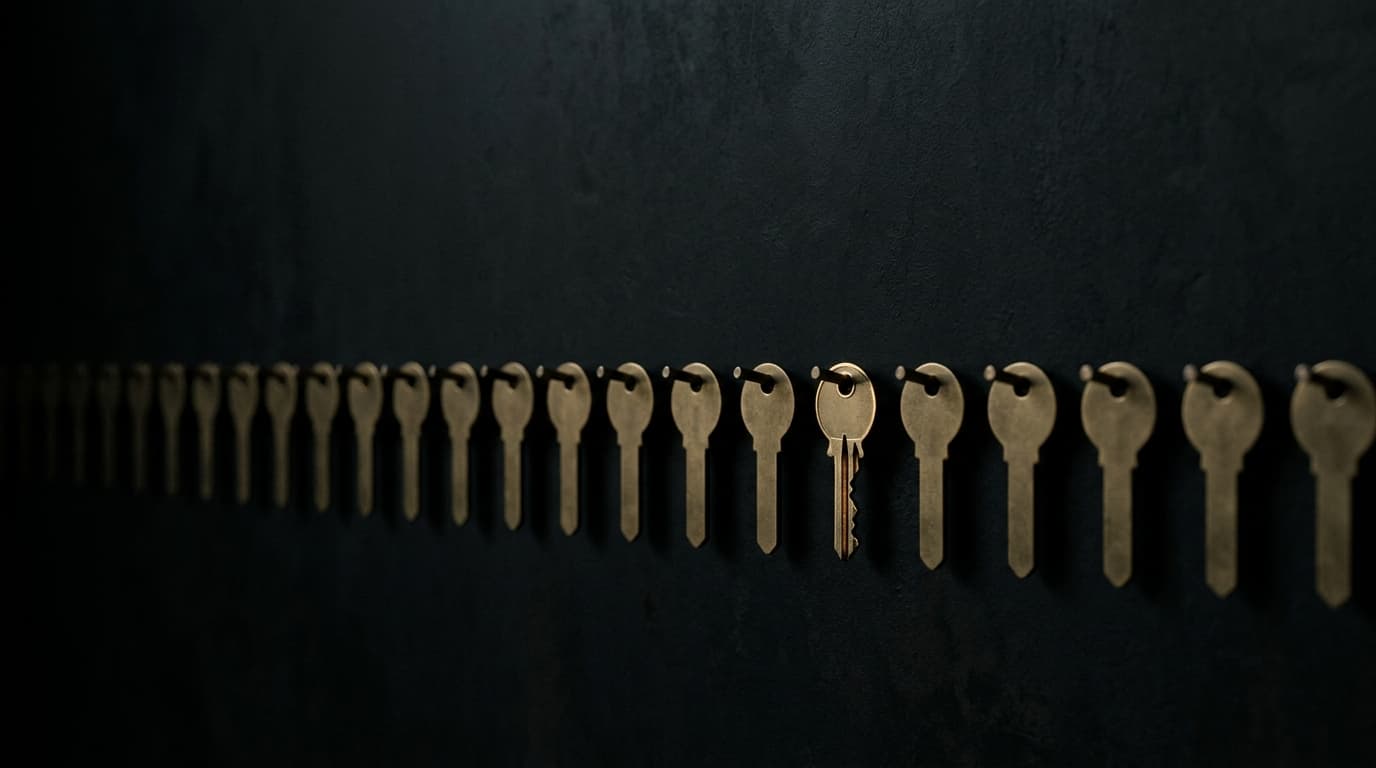
Customers rarely pick your cheaper competitor because of the price. They pick it because, from where they're standing, the two of you look the same. When two options look the same, the cheaper one is the only sensible choice.
That's the uncomfortable part. Most businesses losing on price aren't worse than the company beating them. They're just harder to tell apart.
Do customers really buy on price?
Some do. Every market has buyers who will always take the lowest number, and you shouldn't chase them.
But most buyers aren't hunting for the cheapest option. They're trying not to make a mistake. They compare a few businesses, look for a reason to pick one, and fall back on price only when they can't find one. Price is the tiebreaker, not the first question.
A small business owner put it well on r/smallbusiness recently: tired of always being compared with someone cheaper. Most replies said the same thing, that there's always someone cheaper. That's true, and it misses the point. The comparison only happens because nothing else stood out.
They look safer, not better
Buyers can't see your work before they buy it. So they judge what they can see: your website, your profiles, your proposal, how quickly you reply, what your price says next to everyone else's.
That's why a cheaper competitor can win even when your work is better. If their page looks more established, the buyer feels safer with them, and safety beats quality the buyer can't yet see.
There are three ways this goes wrong, and they need different fixes:
- You look risky. Something in how you present raises a doubt, so buyers pick whoever raises fewer.
- You look interchangeable. Nothing tells you apart, so price decides. This is the common one.
- You're invisible. Buyers never put you on the list in the first place.
Being cheap isn't the problem. Being swappable is
IKEA is the cheapest option in its category, and nobody can copy it. Apple charges more than anyone, and people queue for it. Both prices are strong because each one is part of what the brand stands for.
What's weak is a price in the middle that's attached to no claim at all. If a buyer can swap you for someone else without losing anything they can name, they'll swap you for the cheaper one.
Why do customers choose a cheaper competitor?
Customers choose a cheaper competitor when they can't see a difference worth paying for. Most buyers aren't hunting for the lowest price. They're trying to avoid a bad decision, and when two businesses look alike, price is the only thing left to compare. The fix isn't a lower price. It's making your difference visible before the buyer starts comparing.
How do you stop losing on price?
- Write the sentence. One line a buyer could repeat about why you're different. Not "quality and service": everyone says that. Something only you can say.
- Put it where buyers look first. The top of your website, your profile bios, the first page of every proposal.
- Show proof that matches your price. Results, names, before and after. Claims without proof read as noise.
- Remove what makes you look risky. Old photos, a template logo, a slow reply, a page that hasn't changed in years.
If buyers already tell you you're too expensive, start with what to say when a client says you're too expensive. And if the sentence in step one won't come, that's the job a brand strategist does.
You don't need to be the cheapest. You need to stop being the same.